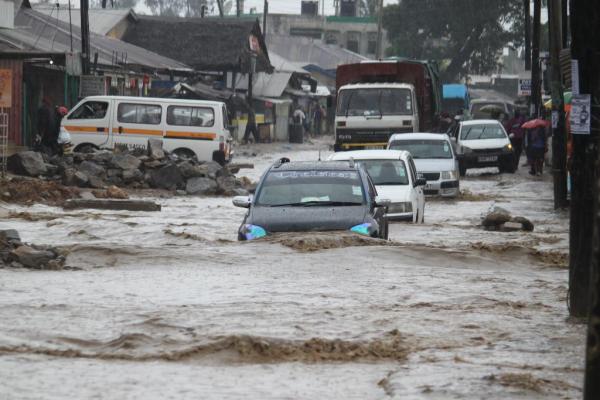


Nairobi, October 28- County governments and disaster response teams in areas considered vulnerable to flooding have been urged to strengthen preparedness ahead of forecasts of intense El Niño-related rainfall during Kenya’s October-to-December short-rains season.
Environment Principal Secretary Festus Ng’eno said the government was working to protect lives and livelihoods, particularly in Western Kenya, the Rift Valley and low-lying flood-prone areas such as the Tana Delta.
Speaking during the unveiling of Safaricom’s 2026 Sustainability Report on Tuesday, Ng’eno cited heavy rainfall already recorded in Trans Nzoia County as an indication of the need for early action. One weather station recorded 147 millimetres of rain in the week leading up to October 18, including 110 millimetres in a single day.
He warned that Kenya had previously experienced severe consequences from heavy rainfall, including during the 1997 El Niño event and the rains of 2023 and 2024, which caused deaths, destroyed homes, damaged roads and disrupted schooling.
The Kenya Meteorological Services Authority and the World Meteorological Organization have warned that rainfall could be above average across much of the country, potentially extending into January in some areas.
Ng’eno urged counties to clear drainage systems before heavy rainfall begins and called on farmers to use seasonal forecasts when planning planting and protecting livestock.
Residents living along riverbanks and in flood-prone areas were also advised to heed official warnings and relocate when instructed by authorities.
Concern has also been raised over rising water levels in Rift Valley lakes. The Principal Secretary said Lake Baringo had expanded by approximately 119 square kilometres since 2010, while Lake Bogoria had grown by about 11 square kilometres. More than 40,000 people have reportedly been affected by the changes.
Authorities are working with Baringo County and other agencies to manage disaster risks in the region, including the possibility of further flooding that could threaten homes, farms, infrastructure and ecosystems.
The World Meteorological Organization has warned that the El Niño event could become exceptionally strong. Officials say early warning systems and timely preparations will be critical in preventing the anticipated weather conditions from escalating into a humanitarian crisis.